Ask what a website costs and you get a number for building it. The number is real, and it is not the cost. The cost is what arrives afterwards: hosting every month, the domain every year, a certificate that has to be renewed, a backup you assume is running, and somebody to phone when the contact form quietly stops sending. None of that is in the quote, and all of it is yours to remember.
Then there is the other half, which nobody quotes at all. The site is up, and now it has to be found, and the enquiries have to go somewhere, and something has to go out on Facebook this week. So you buy a mailing tool, and a scheduling tool, and a place to keep the leads, and by the end of it you are paying six subscriptions that do not talk to each other and retyping the same customer's details into three of them.
One price, and the parts nobody warns you about are in it
Velora is five thousand rand a month. Not a build fee and then a bill, and no setup fee. Inside that price:
- A website, drafted from a sentence about your business, built to be found and published only when you say so
- Hosting, on a South African server, so the site is close to the people using it
- Your own web address, with the certificate issued and renewed for you
- Nightly encrypted backups to South African storage, with a restore tested every month
- Every enquiry captured, tagged with where it came from, and worked through a list that tells you who has not been phoned yet
- Consent stored per channel, in the wording the person actually saw, because POPIA asks you to prove it and a screenshot is not proof
- Email campaigns, with opens and clicks counted in your own account
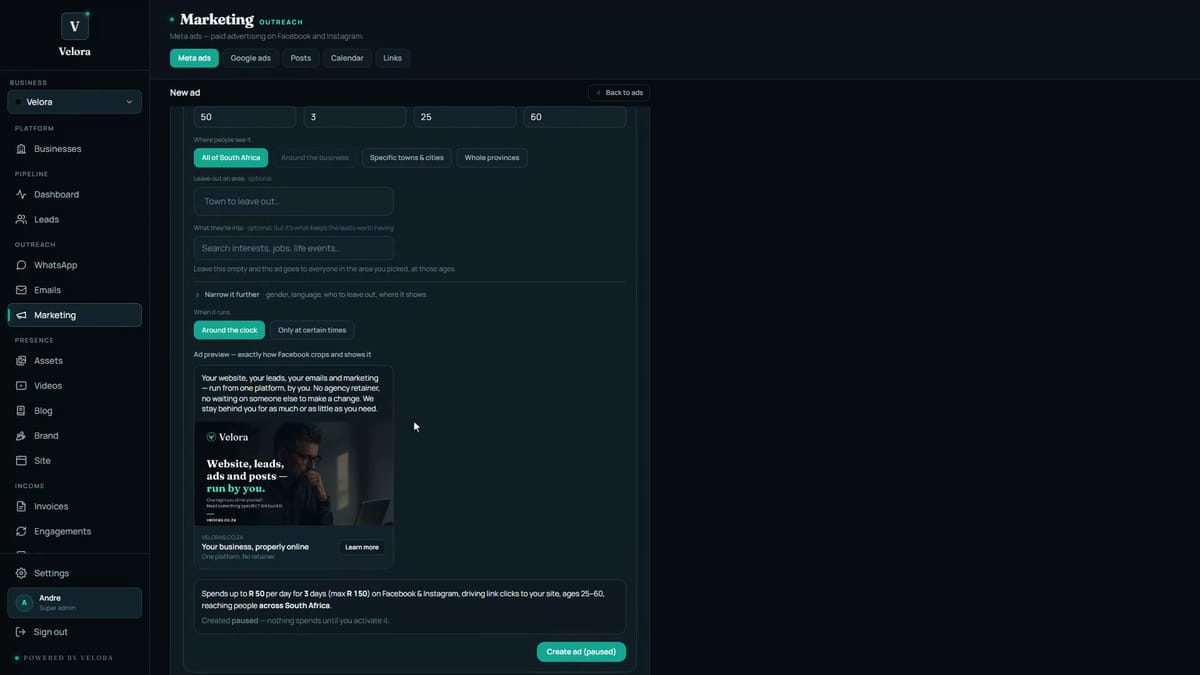
- Posts and ads for Facebook, Instagram and Google, written in your voice from your own photographs
- A WhatsApp inbox for the business number, so the conversation is not stuck on one person's phone
- Invoices and expenses, including a bill reader that always waits for a person
- Branded short links and QR codes for print, counted next to the enquiries they produced
- Updates, continuously, with nothing to upgrade and nothing to patch
What is not ours to charge for: ad spend, WhatsApp conversation charges and email volume past the free tier. Those are paid to Facebook, to Google and to the email provider directly, at their price, never marked up by us.
Who actually runs it
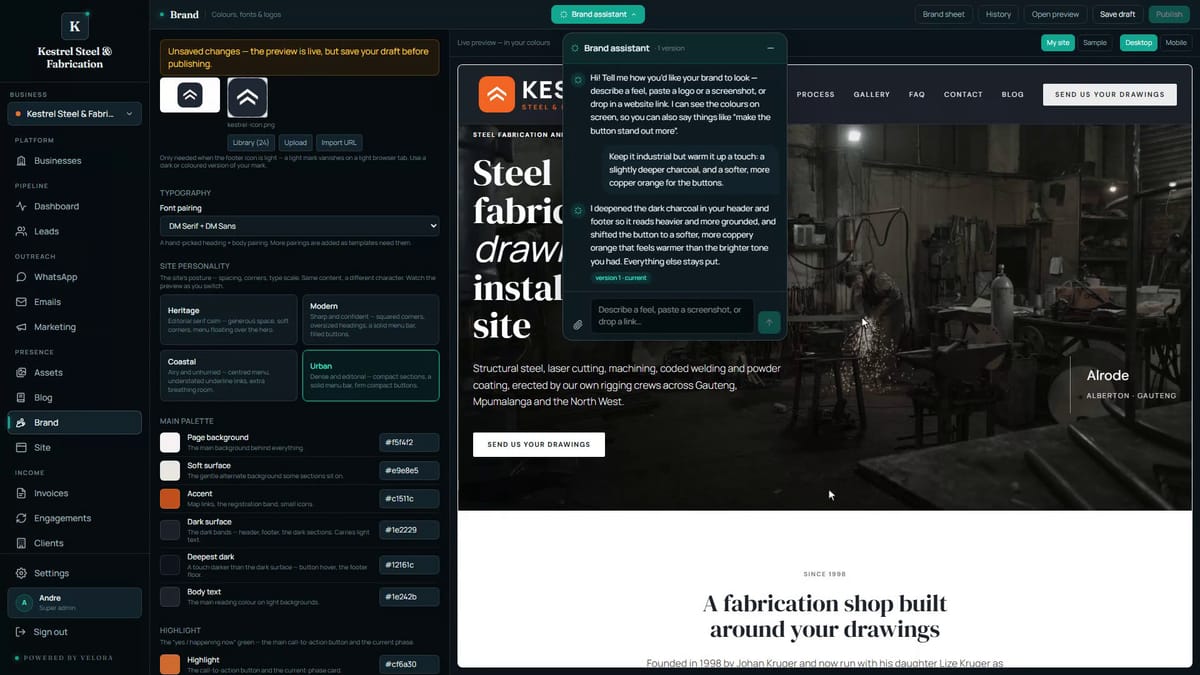
You do. That is the whole design. The dashboard is built for somebody who runs a business rather than somebody who runs software, and the hard parts are done for you inside it: the site is drafted, your colours and typefaces are read off your own logo, and your emails, posts and ads come back written and waiting for you to approve.
If you would rather not, we run it for you at nine thousand rand a month and you approve things instead. The difference between the two is who does the work, not what you get.
What it will not do
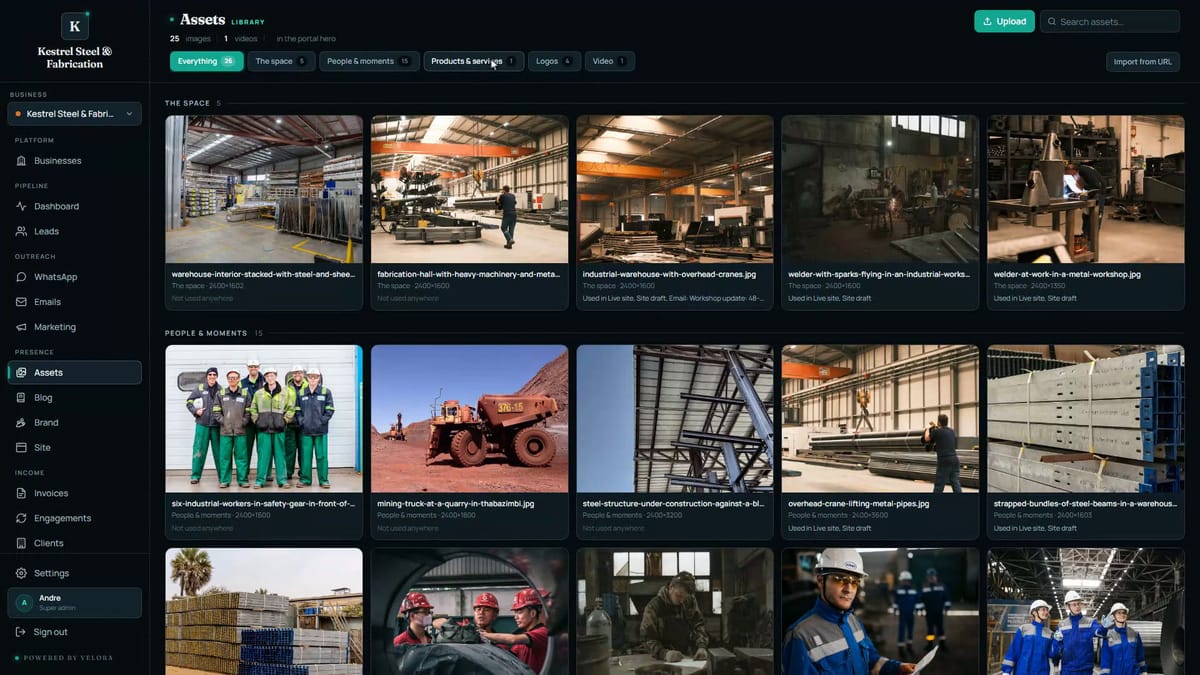
The useful half of any of this is what the software refuses. A price only appears on your site if you put it there, word for word. Every picture is one you uploaded. Reviews are your customers' words, exactly as they wrote them. Contrast is checked by the software rather than judged by the AI, so nothing publishes that cannot be read on a phone. A page that is not finished will not go live. A bill waits for a person, every time, and a supplier who changes their bank details gets flagged rather than paid.
None of those are promises about how the AI behaves. They are rules in the software, and they apply the same way whether the words came from you or from the assistant.
The short version
One login, five thousand rand a month, your hosting and your domain inside it, and you keep the address you already have. Built and run in South Africa.